What Are the Best Electric Scooter Motorcycles from China?
Choosing an Electric Scooters Motorcycle from China involves more than comparing top speeds or glossy photos. Buyers should look closely at motor output, battery capacity, braking hardware, frame construction, and the support available after purchase. A scooter that feels lively on a smooth showroom floor may behave differently on rough pavement or steep streets. Details matter.
Chinese manufacturers offer a wide range of electric two-wheelers, from compact city models to larger machines built for longer rides. Specifications can help narrow the field, but they do not tell the whole story. Check whether the battery is removable, how long a full charge takes, and what warranty terms actually cover. Ask about replacement parts, too. A low purchase price can lose its appeal if a basic component is difficult to source.
This guide compares the features that make particular models worth considering, while distinguishing useful claims from marketing language. It also explains how riding range, rider weight, temperature, hills, and speed can affect real-world performance. Numbers on a product page are starting points, not promises. That distinction is easy to overlook.
There is no single best choice for every rider. A commuter may value manageable weight and dependable braking, while a longer-distance rider may prioritize battery size and comfort. Product details can change between batches, and independent testing is not always available. So verify the current specification sheet and confirm support arrangements before deciding.
## Define Chinese Electric Scooter Motorcycles and Their Vehicle Classes
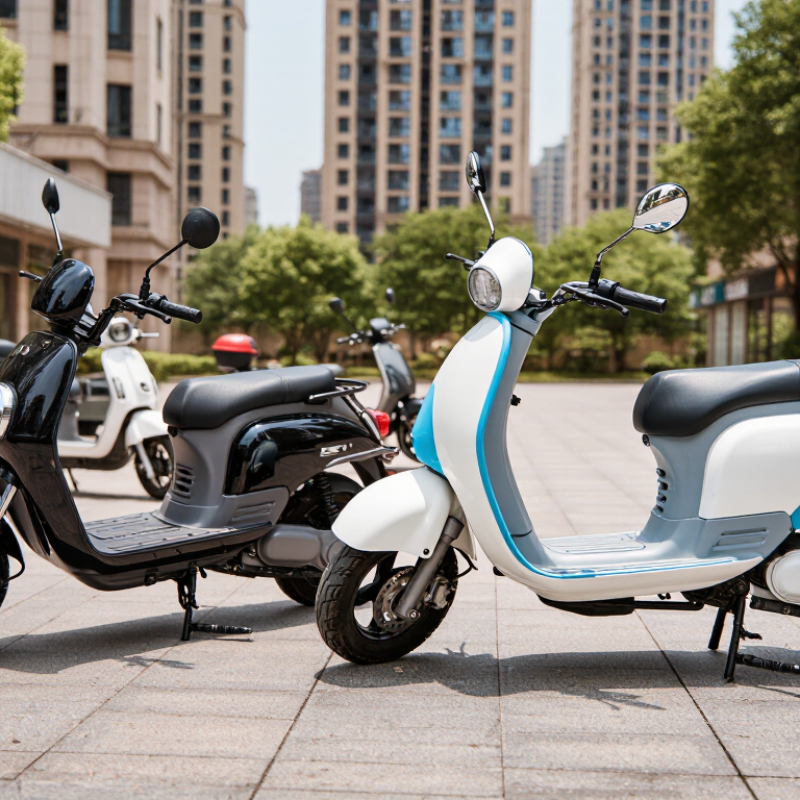
Chinese electric scooter motorcycles are two-wheeled electric vehicles designed for urban travel, delivery, and short regional trips. Their classes differ by speed, motor output, registration rules, and equipment. An electric bicycle generally has pedals, a top speed of 25 km/h, and a rated motor power of 400 watts or less under China’s GB 17761-2018 standard. It is closer to a bicycle than a motorcycle.
Electric mopeds occupy the middle ground. They usually resemble small scooters, but their legal treatment depends on speed, power, and local approval. Electric motorcycles use stronger motors, motorcycle-grade frames, larger brakes, and higher-capacity batteries. These vehicles require more careful licensing and safety checks. The boundary is not always tidy. Export listings sometimes use “scooter motorcycle” for several different classes.
Industry data shows why these distinctions matter. The International Energy Agency reported in Global EV Outlook 2024 that global electric two- and three-wheeler sales approached 10 million units in 2023, with China representing the largest market. China’s scale supports many battery, motor, and controller configurations. Yet high sales do not guarantee equal quality. A professional evaluation should check battery certification, thermal protection, braking distance, frame strength, charger compatibility, and spare-parts support. Specifications can look impressive on paper. Real-world range may fall sharply in cold weather, heavy traffic, or with a passenger. Local classification should always be confirmed before purchase.
## Compare Leading Models by Power, Range, Battery, and Price
What Are the Best Electric Scooter Motorcycles from China?
Chinese electric scooter motorcycles cover several practical performance levels. Entry commuter models usually deliver 2–3 kW and reach 45–65 km/h. Their real range often falls between 60 and 100 kilometers. Mid-range models use 5–8 kW motors, offering stronger hills and speeds near 80–110 km/h. Higher-performance versions can exceed 10 kW, but they cost more and consume energy faster. Peak power figures can mislead. Continuous power matters more during long climbs, heavy traffic, and hot weather.
Battery size strongly affects range, charging time, and price. A 72V 40Ah battery may suit daily commuting, while a 72V 80Ah pack supports longer routes. Lithium batteries usually reduce weight and provide better cycle life, but replacement costs remain significant. Prices commonly range from about $1,500 for basic models to over $6,000 for powerful versions. I would not trust claimed range without checking rider weight, road conditions, and test speed. Real-world results are often lower. That is an uncomfortable detail, but it matters.
Tips: Choose hydraulic brakes, proper lighting, and a removable battery when possible. Ask for battery-cell details and a written warranty. Check charger safety and spare-part availability before ordering. A slightly slower motorcycle may offer better reliability. I once underestimated storage space, and the daily inconvenience became obvious quickly. Consider service support, not only acceleration.
## Evaluate Motor Output Against China’s 25 kW Electric-Motorcycle Class Limit
Motor output is the first filter when comparing Chinese electric scooter motorcycles. Within the 25 kW class, a claimed 20 kW motor leaves useful headroom. That margin can protect classification, but only if the rating is continuous. Peak numbers are slippery. Many technical sheets quote peak power for a few seconds, not sustained output. On a dynamometer, I would record continuous power, peak power, torque, and thermal reduction.
At 25 kW, a 72-volt system draws roughly 347 amps before losses. A 96-volt system needs about 260 amps. Lower current usually means cooler cables and less voltage sag. Battery and inverter limits therefore matter as much as the motor label. The IEA’s Global EV Outlook 2024 identifies electric two- and three-wheelers as a major electrification segment in Asia. BloombergNEF reported average lithium-ion pack prices of 115 dollars per kWh in 2024, down 20 percent from 2023. Lower battery costs help, but they do not guarantee stronger output.
A 25 kW ceiling is not automatically a performance target. Cooling design, cell chemistry, and software calibration decide whether power survives a long hill. My practical mistake was trusting a peak figure without checking its duration. Look for a test sheet, controller current, battery discharge rating, and temperature logs. Real usefulness often sits below the headline number.
What Are the Best Electric Scooter Motorcycles from China? — Evaluate Motor Output Against China’s 25 kW Electric-Motorcycle Class Limit
| Rated Motor Output |
Approx. Mechanical Horsepower |
Share of 25 kW Reference Limit |
Headroom Below Limit |
Output-Based Assessment |
What to Verify Before Purchase |
| 5 kW |
6.7 hp |
20% |
20 kW |
Low-output option; may suit lower-speed urban use, depending on the vehicle’s design and approved classification. |
Rated versus peak power, vehicle category, maximum design speed, and applicable registration requirements. |
| 11 kW |
14.8 hp |
44% |
14 kW |
Moderate-output reference point; offers more power than a basic commuter setup while remaining well below the stated limit. |
Continuous rated output, battery voltage and capacity, vehicle mass, and the homologation documents for the exact model. |
| 15 kW |
20.1 hp |
60% |
10 kW |
Mid-range reference point for buyers prioritizing stronger acceleration; motor output alone does not establish road legality. |
Whether the quoted figure is rated or peak power, plus controller limits and the approved vehicle category. |
| 20 kW |
26.8 hp |
80% |
5 kW |
High-output reference point with limited headroom below the title’s 25 kW benchmark. |
Official rated-power specification, maximum design speed, braking equipment, and registration eligibility. |
| 25 kW |
33.5 hp |
100% |
0 kW |
At the stated benchmark. Confirm the applicable technical rule and vehicle classification rather than relying on a marketing claim. |
Current Chinese regulations and standards applicable to the vehicle, type-approval records, and the definition of motor power used. |
| 30 kW |
40.2 hp |
120% |
5 kW above |
Exceeds the stated 25 kW reference; may fall outside a class defined by that limit, subject to the applicable rules. |
Exact jurisdiction, vehicle class, rated versus peak output, and whether the vehicle is approved for the intended road use. |
Note: These are calculated power-reference examples, not specifications for particular products. Horsepower uses 1 kW ≈ 1.341 hp. The 25 kW figure is treated here as the comparison benchmark in the title; confirm the current rule and its scope with the relevant Chinese approval or registration authority before purchasing.
## Assess Battery Safety Using GB 43854-2024 Thermal-Runaway Requirements
When comparing electric scooter motorcycles from China, treat battery safety as a document check, not a marketing claim.
GB 43854-2024 covers lithium-ion batteries for electric bicycles. Do not assume it automatically applies to every electric motorcycle or scooter battery. Confirm the vehicle category, battery type, and test scope with the supplier and an accredited laboratory.
Ask for the complete test report, not just a certificate image. Check that the tested battery matches the offered model, including its cell configuration, enclosure, and protection system.
Thermal-runaway testing examines what happens when a cell enters an uncontrolled heating event and whether the battery meets the standard’s safety criteria. Look for the test method, results, sample identification, and laboratory details.
Small differences matter. A report for a similar-looking pack may not prove the pack you are buying was tested.
I would also ask how the manufacturer controls cell sourcing and production changes; paperwork can lag behind real production, and that deserves scrutiny.
Safety is not a single pass mark.