Inquiry
Form loading...
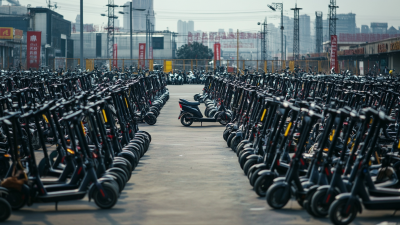
China’s electric two-wheeler industry has become a critical hub for battery manufacturing, assembly, and export. The International Energy Agency reported that electric two- and three-wheelers represented more than half of global sales in 2023. China remains the leading market and production base. This scale supports competitive pricing, mature supply chains, and rapid product development. However, scale alone does not prove reliability.
A dependable Electric Scooter Battery supplier should provide traceable cells, consistent capacity testing, and documented safety controls. Buyers should examine chemistry, cycle-life results, battery management systems, enclosure protection, and warranty terms. BloombergNEF reported that average lithium-ion battery pack prices fell to 115 dollars per kilowatt-hour in 2024. That benchmark is useful, but scooter packs differ greatly in design and operating conditions. A 48-volt urban battery may face rain, vibration, heat, and daily charging stress.
Details matter.
Supplier audits should include factory records, sample testing, production tolerances, and after-sales response times. Certifications can support confidence, yet certificates do not replace independent verification. The China Industrial Association of Power Sources and other industry bodies continue highlighting quality consistency and battery safety as important development issues. Some supplier rankings appear convincing but rely on limited public data. That is a weakness worth acknowledging. This guide compares China’s leading suppliers through technical capability, manufacturing experience, product customization, quality evidence, and export service. The goal is not to declare one permanent winner. Markets change, and a supplier suitable for delivery fleets may disappoint a premium commuter brand.
China Top Electric Scooter Battery Suppliers?
China’s electric scooter battery industry has developed a dense and flexible supply chain. It connects cell production, battery pack assembly, electronic controls, and charger manufacturing. Lithium-ion batteries dominate newer scooters because they offer lower weight and longer usable range. Lead-acid batteries remain relevant in budget models and short-distance transport. This mix reflects different customer needs, not one universal solution.
Manufacturing activity is concentrated across several industrial regions, supported by experienced engineers and established component networks. Large factories often provide automated welding, aging tests, and traceable production records. Smaller specialists may offer faster customization for unusual frame sizes or voltage requirements. However, capacity alone does not prove reliability. A polished factory tour can hide weak testing procedures.
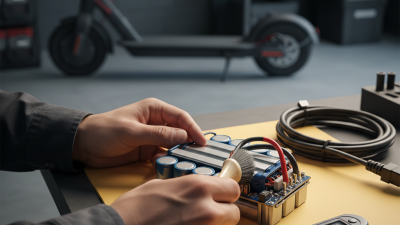
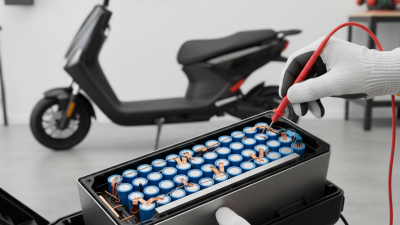
For buyers comparing Chinese suppliers, practical verification matters. Inspectors should confirm cell consistency, battery management system settings, thermal protection, enclosure strength, and water-resistance testing. They should also review cycle-test data under realistic loads, including hills and frequent braking. Clear labels, serial tracking, safe packaging, and responsive warranty procedures are important. International transport documents and recognized safety test reports should match the actual battery design. Paper compliance is not enough.
A useful purchasing habit is ordering samples before approving volume production. Measure range, charging time, temperature rise, and performance after repeated use. Small differences can become serious in daily fleets. Some suppliers communicate confidently but provide limited evidence. That is a warning sign. Even reliable manufacturers may need improvement in documentation, after-sales support, or consistency between batches. The best evaluation remains evidence-based and specific.
| Industry Dimension | Typical China Market Data | Technical or Commercial Significance | Buyer Considerations |
|---|---|---|---|
| Dominant Battery Chemistry | Lithium-ion batteries are the mainstream solution. The most common chemistries are lithium nickel manganese cobalt oxide (NMC) and lithium iron phosphate (LFP). | NMC generally provides higher energy density and lighter pack weight, while LFP offers stronger thermal stability and longer service life. | Select chemistry according to range, weight, safety requirements, operating temperature, and target selling price. |
| Common System Voltage | 36 V, 48 V, 60 V, and 72 V nominal systems are widely used in electric scooters and light electric vehicles. | Higher-voltage systems can reduce current at the same power level, helping limit cable and controller losses. | The battery voltage must match the motor controller, charger, display, wiring, and protection settings. |
| Typical Battery Capacity | Approximately 7.5 Ah to 30 Ah for many urban and commuter scooter applications; larger delivery and performance models may exceed this range. | Capacity directly affects usable energy, vehicle range, battery weight, charging time, and purchase cost. | Compare watt-hours rather than ampere-hours alone. A 48 V, 15 Ah pack stores about 720 Wh before accounting for conversion and reserve losses. |
| Energy-Density Range | Pack-level energy density commonly falls below the energy density of individual cells because of casing, wiring, BMS components, thermal barriers, and structural parts. | Cell-level specifications should not be used as a direct substitute for complete battery-pack performance. | Request complete-pack weight, dimensions, rated energy, continuous current, and peak current instead of cell data only. |
| Expected Cycle Life | Typical laboratory targets are about 800–1,500 full cycles for many NMC packs and approximately 1,500–3,000 cycles for many LFP packs, depending on test conditions and end-of-life criteria. | Actual service life is affected by depth of discharge, charging current, storage temperature, vibration, and pack balancing quality. | Ask for cycle-test conditions, retained-capacity definition, temperature, charge rate, and discharge rate. |
| Battery Management System | Commercial packs commonly include overcharge, over-discharge, over-current, short-circuit, temperature, and cell-balancing functions. | The BMS controls electrical protection and provides important information for diagnostics, warranty analysis, and fleet management. | Confirm balancing method, communication protocol, fault records, low-temperature charging protection, and firmware access. |
| Charging Time | A standard charger commonly requires about 4–8 hours for a medium-capacity scooter battery. Fast-charging configurations can reduce this time but require compatible cells, BMS, charger, and thermal design. | Charging speed influences battery aging, heat generation, infrastructure requirements, and user convenience. | Evaluate charging current as a C-rate and verify connector compatibility, charger certification, and thermal limits. |
| Operating Temperature | Many lithium-ion packs are designed for discharge near approximately −20°C to 60°C and charging near approximately 0°C to 45°C, subject to the cell and BMS specification. | Charging lithium-ion batteries below the permitted temperature can cause lithium plating and permanent safety or capacity damage. | For cold-weather markets, require low-temperature charging cut-off or an approved heating solution. |
| Common Pack Construction | Cylindrical cells remain common, while pouch and prismatic formats are also used for customized scooter packs and space-constrained designs. | Cell format affects mechanical strength, thermal management, manufacturing automation, repairability, and packaging efficiency. | Check enclosure sealing, impact resistance, vibration testing, replaceable components, and connector quality. |
| Safety and Testing | Relevant evaluations may include electrical safety, mechanical abuse, thermal performance, ingress protection, transport testing, and electromagnetic compatibility. | International transport of lithium batteries generally requires applicable UN 38.3 testing, while product-market requirements vary by destination. | Request current test reports, battery-pack samples, traceability records, and documentation for the destination market. |
| China Supplier Structure | The supply chain typically includes cell manufacturers, battery-pack assemblers, BMS developers, charger producers, enclosure fabricators, testing laboratories, and recycling operators. | A pack assembler may integrate cells and electronics without producing the cells itself, so supply-chain transparency is important. | Confirm cell origin, production location, quality-control responsibility, warranty ownership, and subcontracting arrangements. |
| Customization Capability | Customization commonly covers voltage, capacity, enclosure dimensions, connector layout, communication functions, mounting points, labeling, and charging parameters. | Custom designs can improve vehicle integration but usually require additional engineering validation and minimum order quantities. | Define a complete technical specification before requesting quotations and prototype samples. |
| Quality-Control Indicators | Important controls include incoming-cell inspection, capacity grading, internal-resistance matching, welding inspection, insulation testing, aging tests, and final functional testing. | Consistent cell matching and weld quality are essential for pack reliability and balanced aging. | Request sample inspection reports, batch traceability, acceptance criteria, and a defined warranty process. |
| Recycling and End-of-Life | Lithium-ion batteries should be collected and processed through authorized recycling channels rather than disposed of with ordinary household waste. | Proper recycling reduces fire risk and supports recovery of valuable materials such as nickel, cobalt, copper, aluminum, and lithium. | For fleet or commercial projects, establish collection, transport, storage, and recycling responsibilities before launch. |
Note: The figures above are representative industry ranges and technical practices for China-made electric scooter battery packs. Actual specifications vary by cell chemistry, pack design, operating conditions, regulatory market, and supplier quality system.