Electric Scooters vs Motorcycles Which is Right for You?
Electric scooters and motorcycles are becoming popular choices for urban transportation. With rising fuel costs and environmental concerns, many seek alternatives. Each option offers distinct advantages and challenges.
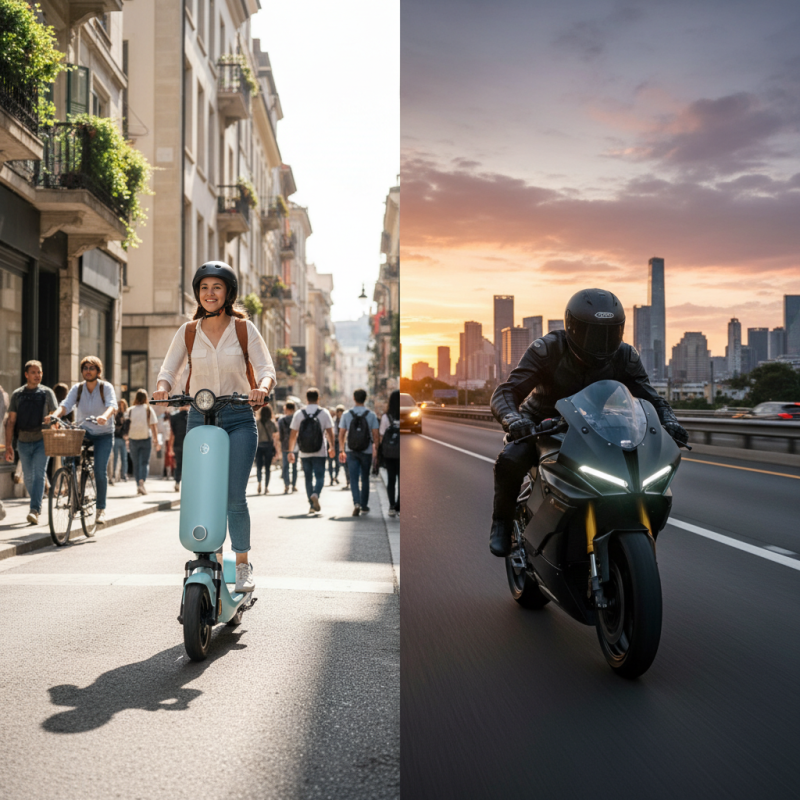
Electric scooters are often lighter and more affordable. They are perfect for short commutes and easy navigation in crowded streets. However, their limited range can be an issue for long-distance travel. On the other hand, motorcycles provide speed and power. They excel on highways and can cover greater distances comfortably. Yet, they require more maintenance and a higher initial investment.
When considering electric scooters vs motorcycles, think about your lifestyle and needs. Do you value convenience over speed? Or do you prioritize longer journeys? Each choice has its pros and cons. Reflecting on these factors will help you make a better decision.
Understanding the Basics of Electric Scooters and Motorcycles
Electric scooters and motorcycles each offer unique advantages and challenges. Electric scooters are often more accessible. They are lightweight and easy to maneuver in tight spaces. According to recent studies, they can reduce urban congestion by up to 30%. This statistic highlights their potential as a practical urban transport solution. Additionally, electric scooters produce zero emissions, making them an eco-friendly choice in many urban contexts.
On the other hand, motorcycles provide speed and longer-range capabilities. They can be more suitable for highway driving. A report from the Motorcycle Industry Council noted that over 60% of riders prefer motorcycles for longer commutes. However, motorcycle operation requires specific licensing and may come with higher insurance costs. Riders often face challenges such as weather exposure and maintenance.
Choosing between the two requires careful consideration. The electric scooter is better for short, urban trips. It's perfect for those who want a simple, low-cost option. Motorcycles, while offering speed and versatility, demand more commitment. Each choice comes with trade-offs that need reflection before making a decision.
Electric Scooters vs Motorcycles: Key Comparison
Key Differences Between Electric Scooters and Motorcycles
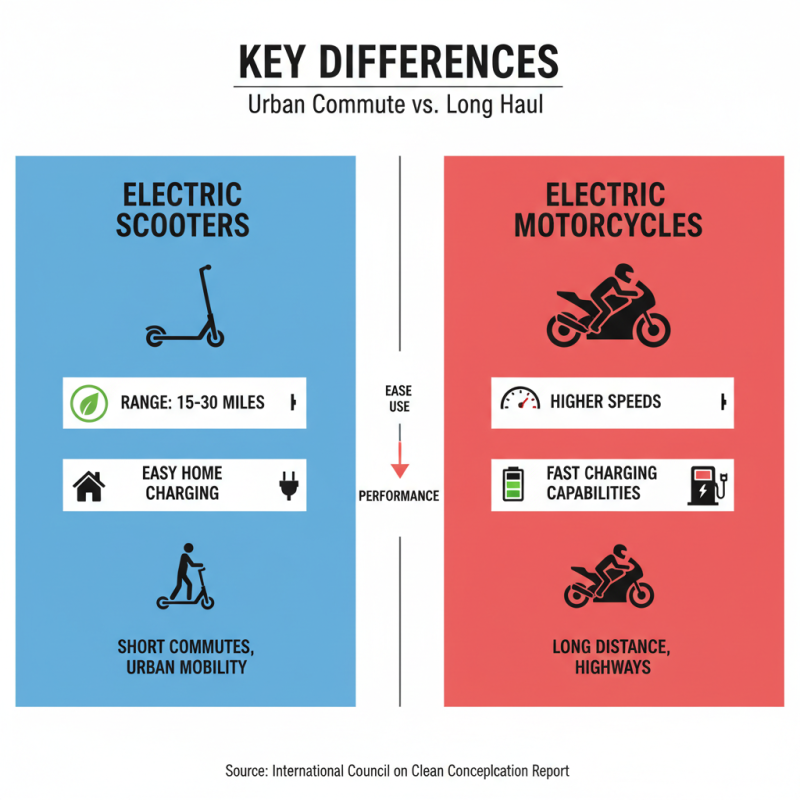
Electric scooters and motorcycles both serve as popular means of transport. However, they cater to different needs. According to a recent report by the International Council on Clean Transportation, electric scooters have gained traction due to their ease of use and eco-friendliness. With an average range of 15 to 30 miles, they are perfect for short commutes. One can quickly charge them at home, making them convenient for daily use.
On the other hand, motorcycles offer a thrilling ride for longer distances. A survey conducted by the Motorcycle Industry Council reveals that motorcycles can cover 200 miles on a single tank. This makes them ideal for adventures. However, they require more maintenance and fuel, which can be a drawback for some. While the initial cost of electric scooters is lower, motorcycles often hold their value better over time.
The decision largely depends on personal needs. Electric scooters might lack speed and power for some riders, while motorcycles can be cumbersome in urban settings. The choice comes down to weighing practicality against adventure. Each has its unique set of advantages and challenges, prompting riders to reflect on what they truly need from their vehicle.
Advantages of Choosing Electric Scooters Over Motorcycles
Electric scooters are gaining popularity for several reasons. According to a recent report by the International Transportation Forum, electric scooters can reduce urban traffic congestion by over 20%. They are lightweight and easy to maneuver, making them ideal for city environments. Their compact size allows for convenient parking, a significant advantage in crowded areas.
The environmental impact of electric scooters is also noteworthy. Data from the American Electric Power Association indicates that using electric scooters can lower carbon emissions by up to 40% compared to motorcycles. This reduction is crucial in combating urban air pollution. Charging an electric scooter is relatively inexpensive; it costs about $0.60 per full charge, which translates to a fraction of a gallon of gasoline.
However, there are some considerations. The range of electric scooters is often limited, typically around 30-40 miles per charge. This can be restrictive for longer journeys. Additionally, riders may face challenges in terms of stability and comfort on rough roads. Evaluating these trade-offs becomes essential when deciding between scooters and motorcycles.
Electric Scooters vs Motorcycles: Which is Right for You?
| Feature |
Electric Scooters |
Motorcycles |
| Initial Cost |
Lower, typically $300 - $1,500 |
Higher, typically $5,000 - $20,000 |
| Maintenance Cost |
Lower, minimal maintenance required |
Higher, regular servicing needed |
| Environmental Impact |
Zero emissions while operating |
Produces emissions depending on fuel type |
| Range |
Typically 15 - 40 miles |
Typically 100 - 200 miles |
| Speed |
Up to 30 mph |
Can exceed 100 mph |
| Portability |
Lightweight and easy to carry |
Heavier and less portable |
| License Requirements |
May not require a license |
Requires motorcycle license |
Factors to Consider When Choosing Between the Two
When choosing between electric scooters and motorcycles, there are several factors to consider. Your lifestyle plays a significant role. If you live in a city, an electric scooter may be more suitable. They are lighter, easier to park, and can navigate through traffic smoothly. Motorcycles, on the other hand, provide more power and longer range. They can handle highways better.
Another factor is maintenance. Electric scooters generally require less upkeep. They lack complex engines and have fewer moving parts. However, you might face issues with battery lifespan. Motorcycles may need regular oil changes and tire checks. They can become costly over time.
**Tips**: Test ride both options. Pay attention to comfort and handling. Consider your budget. Electric scooters may be cheaper at first but look at long-term costs. Think about your commute distance. If it’s lengthy, a motorcycle may be necessary. Evaluate your local laws too. Some areas have specific regulations for scooters.
Cost Comparison: Electric Scooters vs. Motorcycles
Electric scooters and motorcycles serve different needs. When it comes to cost,
electric scooters often shine. They are typically cheaper to purchase and maintain. Fuel costs for motorcycles can add up quickly.
In contrast, scooters usually require less electricity to charge. Maintenance for scooters tends to be simpler and less frequent.
When considering insurance, scooters are generally more affordable.
Motorcycle insurance can be quite high. Factor in vehicle registration and fees; scooters usually demand lower costs here, too.
This can make a significant difference in your budget. However, don't forget about potential battery replacement costs
for electric scooters. An electric scooter's battery may need replacement after a few years.
Tips: Evaluate your driving habits before deciding. If you travel short distances, a scooter might be perfect.
Think about the environment, too. Electric scooters have a smaller carbon footprint. But remember, scooters may not perform as well in bad weather.
Riding a motorcycle can offer more stability and speed.
Weigh your options carefully to find the best fit for your lifestyle.