Why Choose the Right Electric Scooter Motors for Your Business?
Choosing the right motors for electric scooters is crucial for any business in this industry. Experts like Dr. Emily Carter, a leading figure in electric mobility, emphasize, "The efficiency of Electric Scooter Motors directly impacts performance and customer satisfaction." Her words highlight the importance of selecting the right components.
Electric Scooter Motors vary significantly in power, efficiency, and durability. These factors can determine how well a scooter performs in different conditions. A motor with low efficiency can lead to decreased battery life, affecting user experience. Businesses cannot afford to overlook these details.
Moreover, improper motor choices can lead to mechanical failures or increased maintenance costs. This reflects poorly on your brand and may turn away potential customers. As the electric scooter market grows, it becomes essential to prioritize quality and reliability in Electric Scooter Motors. Choosing wisely can set a business apart from its competitors.
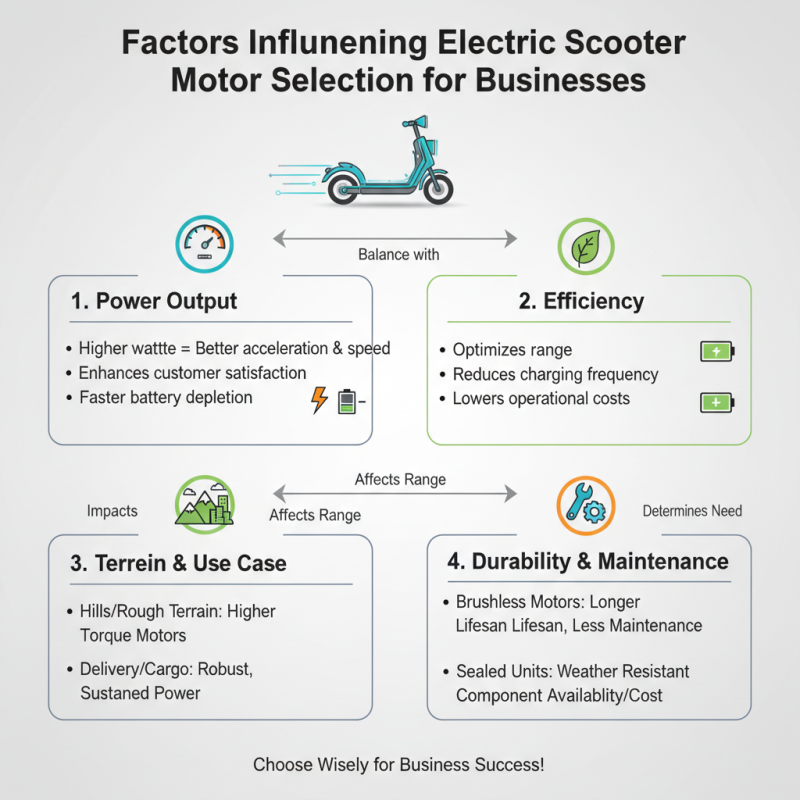
Factors Influencing Electric Scooter Motor Selection for Businesses
Choosing the right electric scooter motors for your business involves careful consideration of multiple factors. One key aspect is the power output. Motors with higher wattage provide better acceleration and higher top speeds, which can enhance customer satisfaction. However, this may lead to faster battery depletion. Balancing power with efficiency is essential.
The terrain your scooters will navigate significantly influences motor selection. For instance, hilly areas require more robust motors than flat urban environments. Weight capacity is another factor. Heavier scooters need stronger motors to maintain performance. Always consider your target audience and their needs.
Tips: Test various motors to see how they perform in real-world conditions. Pay attention to customer feedback regarding performance. Monitor energy consumption to find the sweet spot between power and battery life.
Lastly, don’t overlook maintenance requirements. Some motors may need frequent servicing, which could affect operational costs. Understanding long-term costs versus initial investments is vital for sustainability.
Types of Electric Scooter Motors: Brushless vs. Brushed
Electric scooter motors are vital for performance and efficiency. Understanding the differences between brushless and brushed motors can help businesses make informed decisions. Brushless motors are more efficient. They have higher torque, smoother operation, and longer lifespans. According to research by Grand View Research, the global electric scooter market is projected to reach $38.8 billion by 2025. Companies focusing on advanced motor technology may gain a competitive edge.
Brushed motors are often cheaper. They are easier to maintain, but they sacrifice efficiency. Their lifespan is shorter due to brush wear. A report from Technavio indicates that the demand for electric scooters with brushless motors is increasing. This is largely due to their lower operational costs over time. Businesses must weigh initial costs against long-term benefits.
Choosing the right motor type will impact operational efficiency. Brushless motors provide a better return on investment despite higher upfront costs. However, selecting the wrong motor can lead to frequent replacements and repairs. Many companies overlook this critical aspect, resulting in compromised performance. Evaluating both options thoroughly can prevent costly mistakes.
Why Choose the Right Electric Scooter Motors for Your Business? - Types of Electric Scooter Motors: Brushless vs. Brushed
| Motor Type |
Efficiency (%) |
Maintenance |
Torque (Nm) |
Price Range (USD) |
| Brushless Motor |
85-90 |
Low |
20-30 |
200-500 |
| Brushed Motor |
70-80 |
Medium |
10-20 |
100-300 |
Performance Metrics: Speed, Torque, and Efficiency in Electric Motors
Choosing the right electric scooter motors is crucial for businesses aiming to optimize performance. Three critical performance metrics stand out: speed, torque, and efficiency. Speed is often the first metric that comes to mind. However, it’s essential to balance this with other factors. Higher speed can lead to quick deliveries but may sacrifice stability and control.
Torque plays a significant role as well. It determines how quickly a scooter can accelerate, which impacts the overall experience. A motor with higher torque can handle hills better and improve rider confidence. Yet, too much torque may result in a jerky ride. Finding that sweet spot requires careful consideration of the intended use and terrain.
Efficiency is another vital metric. A more efficient motor consumes less energy, extending range and reducing costs. However, focusing solely on efficiency can overlook the importance of speed and torque. As businesses evaluate their options, each metric should be weighed thoughtfully. Insights into these performance areas help businesses make informed decisions. Balancing these metrics isn't easy, and what works today may not suit future needs.
Impact of Motor Quality on Long-term Business Costs
Selecting the right electric scooter motors is crucial for business success. The quality of these motors directly impacts long-term costs. Low-quality motors may lead to frequent repairs and downtime. This can frustrate customers and reduce profitability. Investing in higher-quality motors may seem costly initially, but it pays off in the long run.
Tip: Research motor specifications carefully. Understanding torque, efficiency, and durability is essential. Consider how the motor will perform under various conditions. Long-term reliability can significantly lower maintenance expenses. Motive power must match your business needs to avoid unnecessary losses.
Quality motors contribute to better energy efficiency. This can lower operational costs substantially. Poor-quality options might cause increased energy consumption and higher bills. Over time, these additional costs can accumulate. Evaluate the total cost of ownership when selecting a motor. A higher upfront investment may yield better returns in efficiency and lifespan.
Tip: Test motors in real-world scenarios. This helps assess performance and reliability. Collect data to compare different motor models. Seeking feedback from users can provide valuable insights. Understanding potential weaknesses can lead to informed decisions. Ultimately, choosing the right motor enhances customer satisfaction and boosts your brand’s reputation.
Regulatory Considerations for Electric Scooter Motors in Commercial Use
When considering electric scooter motors for commercial use, regulatory compliance is crucial. Different regions have specific laws governing speed limits, weight restrictions, and safety standards. Businesses must understand these regulations to avoid fines and ensure fleet credibility. Missing these requirements can lead to costly delays and safety issues.
Additionally, electric scooter motors should meet environmental standards. Regulations often dictate emissions and energy efficiency. Non-compliance can damage a company's reputation.
Understanding the overarching legal landscape allows businesses to make informed choices about motor specifications. Employing motors that align with regulations and safety standards can enhance public trust and operational efficiency.
Companies should also consider the weight and durability of the motors. A heavy motor may increase operational costs and negatively affect battery life. Finding a balance can be challenging. Investing in the right technology is essential for long-term success.
Business owners must reflect on their choices to ensure they meet all regulatory requirements while optimizing performance.