2026 How to Choose the Best Electric Scooter Motors for Your Ride?
As the popularity of electric scooters peaks, choosing the right Electric Scooter Motors becomes crucial for riders. With the global electric scooter market projected to reach $41.98 billion by 2026, the demand for efficient and reliable motors is ever-increasing. Riders expect a combination of speed, range, and durability, making the selection process challenging.
Motor specifications vary widely across models. Factors such as wattage, RPM, and voltage heavily influence performance. Data shows that scooters with motors above 500W deliver higher speeds and better hill-climbing abilities. However, these motors may not always suit every rider's needs, particularly in urban settings where maneuverability is key.
Moreover, the need for long-lasting battery life increases the complexity of motor choices. Many consumers overlook how motor efficiency affects overall performance. Additionally, analysis reveals that not all high-watt motors provide the best user experience. Thus, understanding the nuances of Electric Scooter Motors will help riders make informed decisions that cater to their specific riding requirements.

Understanding Electric Scooter Motors: Types and Characteristics
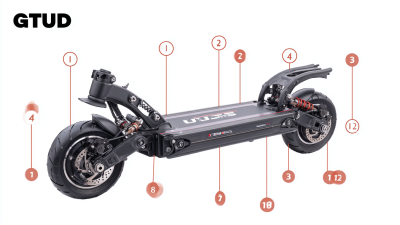
Electric scooter motors come in various types, each with distinct characteristics. The most common types are hub motors and mid-drive motors. Hub motors are mounted in the wheel hub, providing direct power to the wheel. They are lightweight, making them suitable for urban commuting. However, they can struggle on steep hills or rough terrains.
Mid-drive motors offer better performance on varying terrains. They utilize the bike's gears, providing more torque and efficiency. Nonetheless, they can be bulkier and require more maintenance.
When assessing electric scooter motors, consider weight, power output, and terrain type. A powerful motor may seem advantageous, but it might add unnecessary weight.
The average commuter may not need extreme power. Battery compatibility is equally crucial. Ensure that the motor can work efficiently with your chosen battery. If not, the riding experience may suffer.
It's also important to think about the manufacturer's expertise. Not all motor manufacturers prioritize technology and durability. Researching and reading reviews can help gauge reliability. In some cases, user experiences reveal weaknesses not highlighted by brands. Choosing a motor requires balancing these factors for the best ride. There’s often a trade-off between speed and battery life. Finding the right balance is not always straightforward.
Factors to Consider When Choosing Electric Scooter Motors
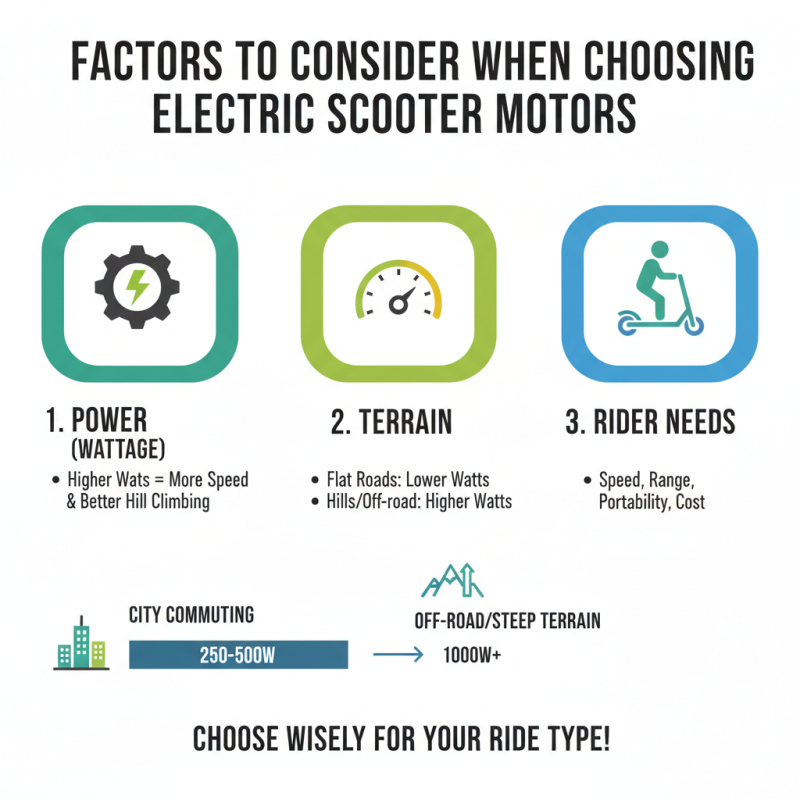
Choosing the right electric scooter motor is crucial for your ride. When considering motors, power is a significant factor. A higher wattage motor can provide more speed and better hill-climbing ability. For city commuting, 250 to 500 watts is typically sufficient. However, for off-road or steep terrain, you might need motors exceeding 1000 watts.
Another important aspect is efficiency. Look for motors that balance power and battery life. A powerful motor drains the battery faster. Consider the type of terrain you'll navigate. If your daily route includes hills, opt for motors designed with torque in mind. They will give you the acceleration needed to tackle inclines smoothly.
Weight is also a factor. Lighter motors make the scooter easier to maneuver and transport. Heavier motors provide more stability but can add bulk. Assess your personal preferences. Reflect on how often you’ll need to carry the scooter. Comfort during rides is just as vital. Don’t overlook noise levels as well. Some motors can be surprisingly loud, affecting your riding experience. Evaluate all these factors thoughtfully. The right choice can significantly enhance your riding adventure.
Performance Metrics: Power, Speed, and Torque Explained
When choosing an electric scooter motor, understanding performance metrics is crucial. Power, speed, and torque significantly impact your ride experience.
Power, measured in watts, determines how quickly a scooter can accelerate. For instance, a scooter with 250W offers decent acceleration for urban commuting.
However, higher power ratings, such as 500W or more, are recommended for hilly areas and faster travel.
Speed is another critical metric. Most electric scooters can reach speeds between 15 to 30 mph. According to industry reports, the average commuting speed varies.
Commuters often prefer models that can maintain 20 mph on flat terrain. Speed plays an essential role in time efficiency, but over-relying on high speeds can raise safety concerns.
Torque, measured in Newton-meters, affects hill-climbing ability. A motor with higher torque can handle inclines better, enhancing overall performance.
For scooters, torque values typically range from 20 to 60 Nm. Users should consider their travel routes.
A high torque rating is beneficial if you encounter steep hills. However, it might not be necessary for flat routes, which presents a balance between performance and efficiency.
Making the right choice requires assessing your needs and the specific conditions of your journey.
Comparing Motor Brands and Models for Electric Scooters
When selecting electric scooter motors, understanding the brands and models is crucial. There are various motor types, including hub and mid-drive motors. Hub motors often provide a quieter ride, while mid-drive motors offer better weight distribution. A report from the Electric Vehicle Association highlights that mid-drive motors are about 20% more efficient in steep terrains.
Considering performance, look at the power output. Many electric scooter motors range from 250W to 2000W. A higher wattage typically implies better speed and hill-climbing capability. However, efficiency matters as well. For instance, a measured 1000W motor may draw more energy under heavy loads. Thus, the choice of motor must reflect your riding style and terrain.
One must not overlook the importance of durability and maintenance. Brands vary in their build quality. Industry surveys indicate that 30% of users reported motor failure within the first year due to poor manufacturing. Consider researching customer reviews and performance reports before committing to a motor. Understanding the nuances between brands can lead to more informed decisions. Every choice carries some risk, and reflection on user experiences can guide you toward a reliable option.
Maintenance Tips for Prolonging the Life of Electric Scooter Motors
Maintaining electric scooter motors is crucial for performance and longevity. Regular checks can help catch issues early. Inspect the motor housing for dirt and debris. A clean motor runs more efficiently. Use a soft brush or cloth to remove grime without damaging sensitive components.
Lubricating moving parts is essential. Check the bearings and axles often. Proper lubrication reduces friction and wear. Be cautious, though. Too much grease can trap dirt. Applying the right amount will extend the motor's life. Listen for unusual noises during rides. These sounds can indicate problems needing attention.
Battery health directly impacts motor performance. Ensure connections are clean and secure. A weak battery strains the motor, leading to damage over time. Charge the battery appropriately, following guidelines. Overcharging can lead to overheating, which is detrimental. Reflect on your riding habits as well. Aggressive riding may accelerate wear on motors. Find a balance for a smoother ride and increased motor longevity.
2026 How to Choose the Best Electric Scooter Motors for Your Ride? - Maintenance Tips for Prolonging the Life of Electric Scooter Motors
| Motor Type |
Power (W) |
Torque (Nm) |
Recommended Use |
Maintenance Tips |
| Hub Motor |
250 - 1000 |
20 - 80 |
City commuting |
Regularly check for wheel alignment and keep clean |
| Mid-drive Motor |
500 - 2000 |
30 - 100 |
Off-road, hilly terrain |
Keep chain lubricated and inspect periodically |
| Brushless DC Motor |
350 - 1500 |
25 - 90 |
General use |
Check electrical connections and avoid overheating |
| Geared Motor |
200 - 800 |
15 - 60 |
Urban travel with varied speeds |
Inspect gear system regularly for wear |