2025 How to Choose the Best Electric Scooter Kit for Your Needs
The rising popularity of electric scooters has transformed urban mobility, making it essential for consumers to choose the right Electric Scooter Kit that meets their specific needs. According to recent industry reports, the global electric scooter market is projected to exceed USD 41 billion by 2025, driven by increasing urban congestion and the need for eco-friendly transportation options. As more individuals seek sustainable commuting solutions, understanding how to select the best electric scooter kit becomes crucial.
When considering which Electric Scooter Kit to invest in, factors such as range, speed, weight, and battery life must be evaluated to ensure optimal performance and suitability for various commuting scenarios. Research indicates that over 50% of e-scooter users prioritize portability and ease of use, highlighting the importance of selecting a kit that complements the user's lifestyle and travel patterns. With advancements in technology and design, the electric scooter industry continues to evolve, offering numerous options tailored to diverse consumer needs. Thus, making an informed decision can significantly enhance the overall riding experience and satisfaction.

Understanding Electric Scooter Kits: Key Features and Options
When exploring electric scooter kits, it’s essential to understand the key features and options to ensure you make an informed decision. First, consider the motor power, typically measured in watts, as it directly impacts acceleration, hill-climbing ability, and overall speed. A higher wattage may offer better performance, especially for those who plan to navigate challenging terrains or require quicker acceleration for commuting. Additionally, examine the battery capacity, often indicated in amp-hours (Ah); this determines how far you can travel on a single charge. A larger capacity offers extended range, which is particularly important for regular users.

Another crucial aspect is the compatibility and ease of installation of the scooter kit with your existing vehicle. Some kits are designed for specific scooter models, while others may have universal components that can be adapted to various designs. Pay attention to the controller type, as it governs the response of your scooter to acceleration and braking, impacting your riding experience. Furthermore, consider additional features like regenerative braking, which can enhance efficiency and prolong battery life, and the availability of customizable options, enabling you to tailor the kit to fit your specific riding style and requirements.
Understanding these key elements will empower you to choose the best electric scooter kit that suits your personal needs and riding habits.
Assessing Your Riding Needs: How to Determine the Right Power and Speed
When selecting the best electric scooter kit, understanding your riding needs is fundamental to making the right choice.
Start by assessing the terrain you'll predominantly navigate. Are you primarily riding on smooth pavement, or do you need to conquer hills and rougher surfaces? For urban commuting on flat surfaces, a kit with moderate power (around 250-500W) may suffice. However, if your route includes steep inclines or unpaved roads, consider a more powerful kit that offers at least 1000W for improved performance and reliability.
Next, consider your desired speed. Think about how quickly you want to reach your destination while maintaining safety and comfort. Many users find that a top speed of 15-25 mph is adequate for city commuting, balancing efficiency and rider control. Keep in mind that higher speeds often necessitate better braking systems and suspension features to ensure a smooth ride.
Prioritize a kit that aligns with your comfort level and experience, as this will enhance your riding experience while keeping safety at the forefront.
Battery Life and Range: Choosing the Best Capacity for Your Lifestyle
When choosing the best electric scooter kit for your needs, one of the most critical factors to consider is
battery life and range. Your daily usage patterns, such as
commuting distance and frequency of rides, will play a huge role in determining the capacity you require. A scooter
with a longer range will ensure you can travel farther without the anxiety of running out of power, making it essential
for routine trips or longer leisure rides.
Tips: Always assess how far you
plan to travel each day and add a buffer to your desired range. For instance, if your commute is
10 miles round-trip, consider a kit that offers at least
15-20 miles of range. This extra capacity accounts for
factors like terrain and sudden detours, ensuring you're never left stranded.
Additionally, the type of battery chemistry—lithium-ion versus
lead-acid—can significantly impact both performance and longevity.
Lithium-ion batteries tend to offer better energy density and longer lifespans, making them a superior choice for
those who prioritize efficiency.
Tips: When selecting a scooter kit,
also consider the recharge time of the battery. A longer charge time can disrupt your schedule, especially if you
need to use your scooter multiple times a day. Opt for a kit that balances capacity with faster charging solutions
to keep your rides seamless.
Installation and Compatibility: Ensuring Your Kit Fits Your Scooter
When selecting an electric scooter kit, installation and compatibility are pivotal factors that can significantly impact your riding experience. Ensuring that your kit fits your scooter model involves measuring key specifications such as wheel size, frame type, and electrical compatibility. According to industry reports, 58% of electric scooter owners experience difficulties during installation due to mismatched components, emphasizing the need for thorough preliminary research. Many kits offer adjustable features to cater to various scooter designs, but users should verify compatibility against manufacturer guidelines to avoid compatibility issues or performance loss.
Additionally, a systematic approach is beneficial for ensuring the longevity and efficiency of your scooter. For instance, it's crucial to assess the wattage of the motor and the voltage of the battery system—findings indicate that mismatched power specifications can reduce overall efficiency by as much as 20%. An accurate understanding of your scooter's characteristics allows you to select a kit that not only fits but also optimizes performance. By investing time in compatibility checks, riders can enhance their scooter's capabilities while avoiding common installation pitfalls. This proactive strategy enhances safety and satisfaction, making the choice of an electric scooter kit a more informed and successful endeavor.
Budget Considerations: Balancing Quality and Cost in Your Purchase
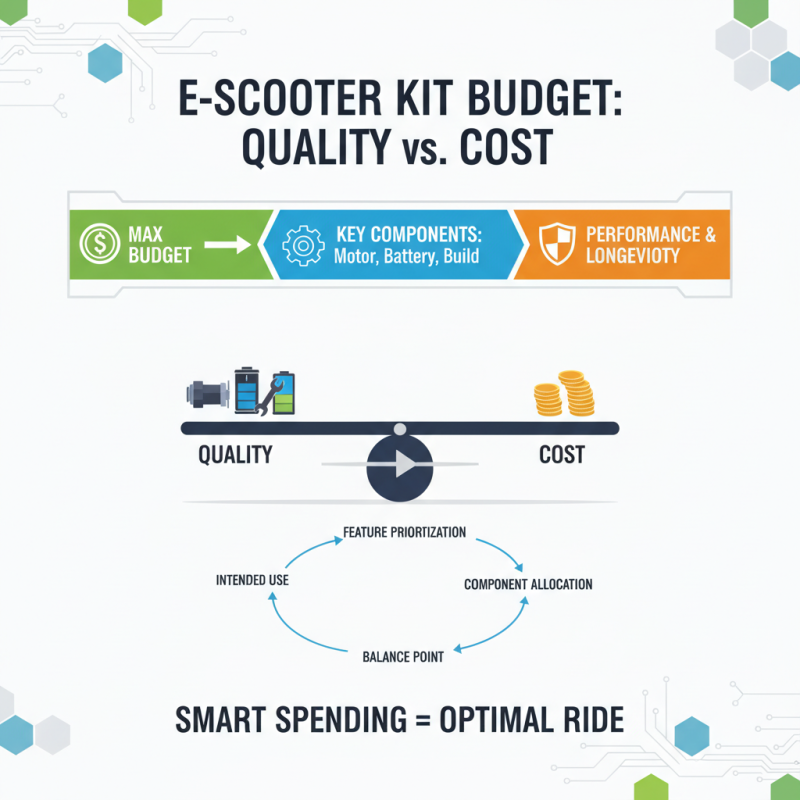
When considering an electric scooter kit, budget plays a crucial role in ensuring you balance quality and cost effectively. Begin by determining your maximum expenditure, which should reflect your intended use and the features that are most important to you. Essential components like the motor, battery capacity, and build quality often dictate the price point of a kit. It’s important to allocate a reasonable portion of your budget to these key elements, as they significantly influence performance and longevity.
As you explore various options, be aware of the trade-offs involved with lower-priced kits. While they may attract buyers with their affordability, such kits often compromise on quality and durability. Researching user reviews and seeking out testimonials can provide insights into the performance and reliability of cheaper alternatives. Additionally, consider potential hidden costs such as maintenance and replacement parts, which can add to the overall expense over time. Striking the right balance between your budget and durability not only ensures a satisfactory riding experience but also maximizes your investment in the long run.